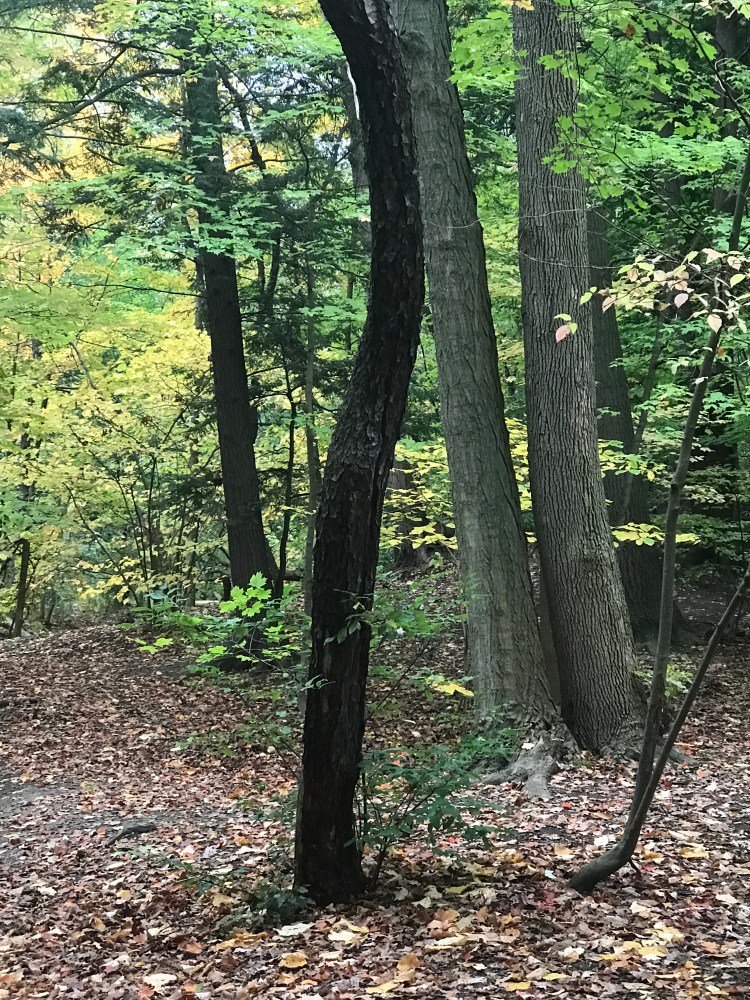
Maud Verhaal and Derek and Jesse and Beau Muller live in a nice old stone house in Waterdown. The house is peaceful for a place with lots of boys. They have a dark grey cat, named Wesley. Maud and Derek have been married for fourteen years. Their boys are 11 (Jesse) and 9 (Beau). She is a French Language Arts teacher at private school in nearby Oakville. Maud was born in Winnipeg, to Dutch and French-Canadian parents, the middle child of three girls. Derek is Dutch too, from a large family of boys. He works in the big city.
Maud loves to drive her practical SUV, and when she’s on the road, she regularly listens to the radio. She loves to read and has worked through almost all of the “Top 50 British Novelists”. Kazuo Ishiguro and A.S. Byatt are her favourites. She is committed to the practice of order. Her mother, Agnès, died at the age of 53. A heart attack. Maud had just married when her mother ceased. Things changed so suddenly that now, fourteen years later, she is still gripped with the same shock that met her on the day that it happened: September 1st. She relives the moment that defined her as helpless, detached, unavailable, suspended. Maud remembers standing at the door to their Toronto bathroom, a late evening call, taking the phone from Derek, hearing her father’s voice. The light in the hall. Lightness in her limbs. Waiting for the sirens to wail.
Every third Tuesday morning, Maud takes off to go to the café in Toronto to see her women, her duo of university pals, the ones with renovations and Hallowe’en themed parties and pretty, coordinated jewelry. Maud doesn’t wear her rings anymore. She doesn’t wear her watch, the one her dad gave her when she was twelve. Maud prefers to pull comfortable fabrics and clean lines on her body – she likes to look polished, but she skips the rest of the steps. No colour on her nails. Her black, leather flats are chic yet practical. In fact, sitting today at Ma Maison, she feels purposefully French. Unfazed but put together. Generally she doesn’t pause much during the day to consider herself – she’s always on the move, and feeling faintly fretful about getting things done. Her two friends look a bit more like they’ve spent time with their closet repertoire. Maud often lets her mind wander, and while she’s sitting there on the cane chair, arms resting on the nicked pink marble table top, legs twisted in a pretzel knot under the chair legs, she’s thinking of other conversations. That moment in the playground years ago when she was eavesdropping, listening to two other mothers share kitchen secrets.
“I always pre-grate my cheeses and freeze them in large ziplock bags.” Said one.
“What a great idea, you must feel better about doing it that way. Like you know where the cheese has come from.” said the other.
Maud is thinking about bookending their back-and-forth with: “You are such a good parent!”. Maud is a tired parent. Maud is wishing now that she was at home sitting on her favourite corner sofa, reading. She needs to be alone, often, to feel settled. Her friends are still talking. Maud rubs her hands together, and runs her fingers lightly over the nail beds, tracing the indentations. She strokes her thumbnails, finding the familiar.
“Hey Maudette, what are you going to do this year for Christmas? Are you and Derek going back to Winnipeg to see your dad?”, asked one of the girls.
Maud replied, “No, no – we’re staying home. Oh gosh, I can’t think quite that far ahead yet. I’m fairly sure dad is coming to see us, and maybe will stay for a week or so. My sisters are having their usual New Years party, so we might go to Montréal with the kids.”
Maud’s sisters had left Winnipeg a few years after she had gone to university in Ontario. Her parents had lived in the old Nellie McClung house on Chestnut Street for forever. When her mum had died, her father couldn’t leave the house, even if the kids were huddles of kilometres, days and days, hours and hours away. The house well proportioned, one window dormer at top, two windows on the second level, two larger windows on the main. There was Maud in the middle, Aline older by three years, and Wilma, younger by three. They used to pretend they would each occupy one level of the house, stacked like the Bremer Stadt Musikanten (the rooster, on top of the cat, on top of the dog). Maud had wanted to be a teacher since she had read about Nellie’s history, her extraordinary drive to educate and be part of the conversation of change for women and equality in Canada, her desire to be all things – maternal, socially responsible, nationally minded. Nellie’s first book, a bestseller from the early 1900s, was “Sowing Seeds in Danny”, and Maud had read it countless times. A poster of the cover art of the original book hung in her classroom, next to a few Charles Gagnon reproductions of Maria Chapdelaine, and a portrait of Suzanna Moodie.
 Anouchka Freybe
You must be logged in to post a comment.